
Your journey into Higher Education starts here
Guided. Supported. Successful.
From your first open day to enrolment, and everything in between - we’ve got you covered.
Apply Now for September 2026 intake
2026 places are filling up. Speak to our team today and take the first step towards your future.


Supporting UK students into higher education.
Welcome to Uni Talent Network
Choosing the right university course is one of the biggest decisions you'll make. At Uni Talent Network, we make sure you make it with confidence, not guesswork.
How it works?
Course selection, application support, documentation guidance, and enrolment advice - all in one place.
Who we support?
UK-based students exploring study options across a wide range of subjects.
Why Uni Talent Network?
Personalised advice, trusted university partners, and ongoing support - focused on your long-term success, not just enrolment.
Why Choose Uni Talent Network?
We are more than just an enrolment service. We are your dedicated partners in education, providing continuous support and expert guidance every step of the way.

Personalised one-to-one guidance
From choosing the right course to preparing your application, our team offers personalised one-to-one guidance designed around your needs, schedule, and ambitions.

Long-Term Support
We stay with you from your first enquiry through to graduation.



Featured Blogs
Explore a curated selection of our most insightful articles, hand-picked to guide you on your journey.

Returning to Education as a Mature Student: What You Need to Know
Returning to education as a mature student can feel like a big step, especially if it’s been years since you last studied. Many adults worry about entry requirements, fitting in, or balancing study with work and family commitments. The good news is that higher education in the UK is increasingly designed to support mature learners . With flexible entry routes, multiple intakes, and structured support, returning to study is more achievable than many people realise. At Uni Talent Network , we work with students from a wide range of backgrounds, including those returning to education later in life. This guide explains what mature students need to know, and how to approach the journey with confidence. Who Is Considered a Mature Student? In UK higher education, a mature student is typically someone aged 21 or over at the time they start their course. Mature students may include: Career changers Parents returning to education Individuals who entered work straight after school Those who paused education for personal or professional reasons There is no single “profile” of a mature student and universities value the experience mature learners bring into the classroom. Do You Need Traditional Qualifications? One of the most common concerns is: “Do I need A-levels or recent qualifications?” Not always. Many higher education providers consider: Previous study (even if completed years ago) Relevant work or professional experience Alternative qualifications or pathways Mature students are often assessed more holistically , taking into account readiness to study rather than just recent academic results. What Are the Benefits of Studying as a Mature Student? While returning to education can feel daunting, mature students often bring strengths that support success, such as: Clear motivation and focus Real-world experience Strong time-management skills A clear sense of career direction Many mature learners find they are more engaged and confident than they were earlier in life. Balancing Study with Work and Life Higher education providers increasingly recognise that mature students often juggle multiple responsibilities. Support may include: Flexible study options Clear academic structures Guidance on workload planning Student support services Understanding these options early can help you choose a course and intake that fits your lifestyle. Choosing the Right Intake as a Mature Student Mature students often benefit from having more than one intake option . Depending on availability, you may be able to start in: January June/July September Choosing the right intake can help you: Avoid long gaps in study Plan around work or family commitments Start when you feel most ready (For a full overview of UK intakes, students can explore our intake guidance resources.) How Uni Talent Network Supports Mature Students Uni Talent Network provides guidance specifically designed to support mature learners, including: Understanding entry routes and eligibility Identifying suitable intakes and courses Explaining application steps clearly Supporting progression into higher education Our role is to help you explore your options confidently, without pressure or assumptions. It’s Never Too Late to Start Returning to education is not about “catching up”, it’s about moving forward. Every year, thousands of mature students successfully enter higher education, bringing experience, perspective, and determination with them. With the right support and planning, higher education can be a realistic and rewarding next step at any stage of life.
January 22, 2026
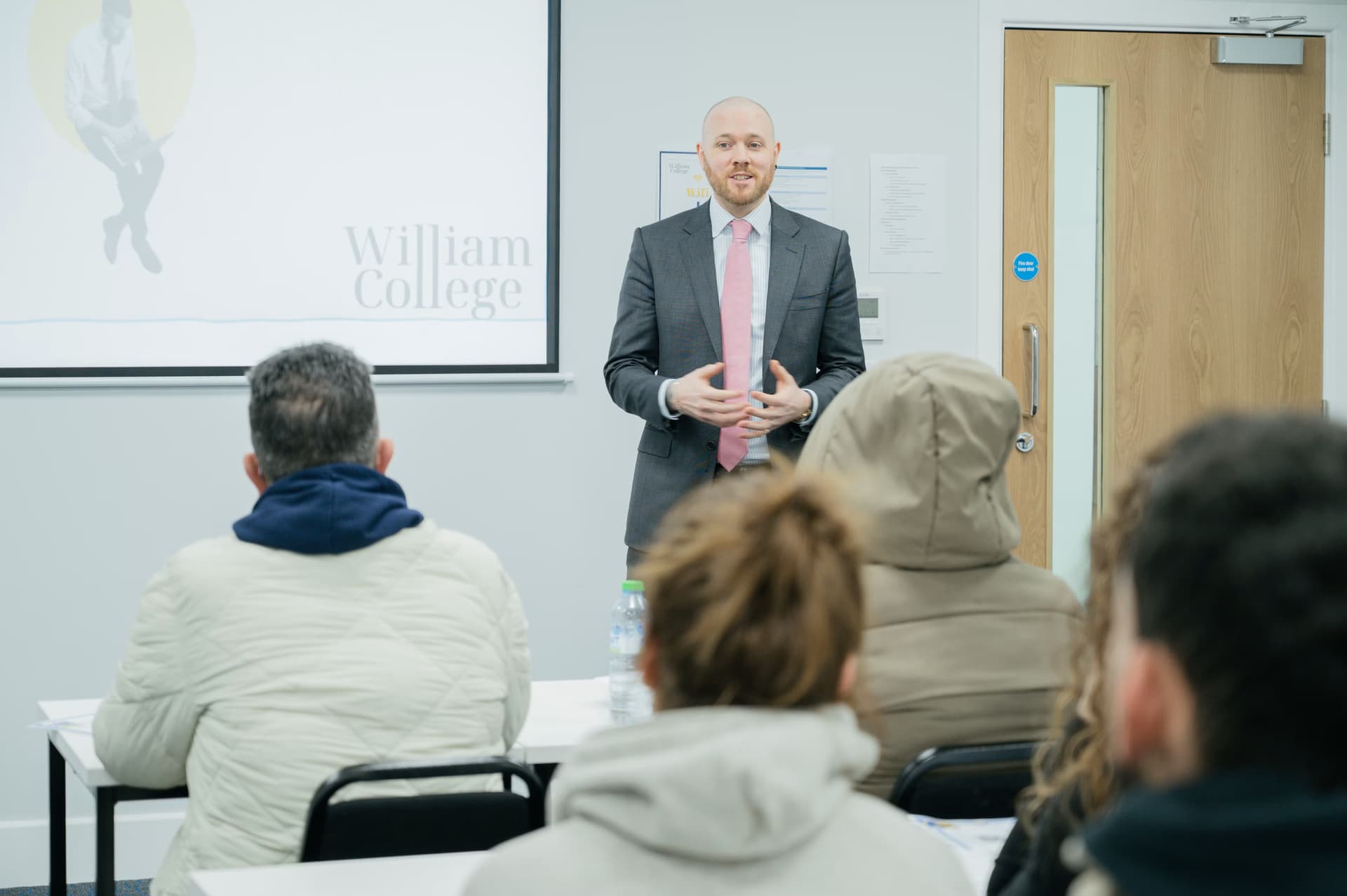
Start Your Higher Education Journey in February 2026 with William College
In Partnership with Bath Spa University | Apply by End of January 2026 If you’re looking to begin or continue your higher education journey in the UK, William College offers an excellent opportunity to take the next step. Working in partnership with Bath Spa University , William College delivers higher education programmes designed to support academic progression, personal development, and long-term career goals. Applications are now open for the February 2026 intake , with the application deadline closing at the end of January 2026 . Higher Education with University Recognition William College is a higher education provider offering programmes that are validated and awarded through its partnership with Bath Spa University . This means students benefit from: University-recognised qualifications Academic standards aligned with UK Higher Education Clear progression routes into undergraduate and postgraduate study Students receive structured academic support while studying in a focused college environment - combining personalised guidance with university-level outcomes. Courses Designed for Academic & Career Progression The courses delivered at William College are designed to help students: Build strong academic foundations Develop critical thinking and subject knowledge Prepare for further university study or professional careers Whether you are progressing from previous study, returning to education, or changing direction, William College supports students in moving forward with confidence. Full list of courses: BA (Hons) Business and Management (Law) with Foundation Year LLB (Hons) Law LLB (Hons) Law with Foundation Year BA (Hons) Business and Management (Law) BSc Business Management (Human Resource Management) with Foundation Year CertHE Business and Management CertHE Business CertHE Law Why Choose the February 2026 Intake? Starting in February 2026 allows you to: Begin higher education without waiting for September Stay academically and professionally on track Make productive use of the year ahead Join a focused intake with tailored academic support This intake is ideal for students who are ready to take action now and want a structured pathway into higher education. Application Deadline: End of January 2026 To secure a place for the February 2026 intake , applications must be completed by the end of January 2026 . Early applications are encouraged to allow sufficient time for academic checks, guidance, and enrolment preparation.
Ashis L
January 16, 2026
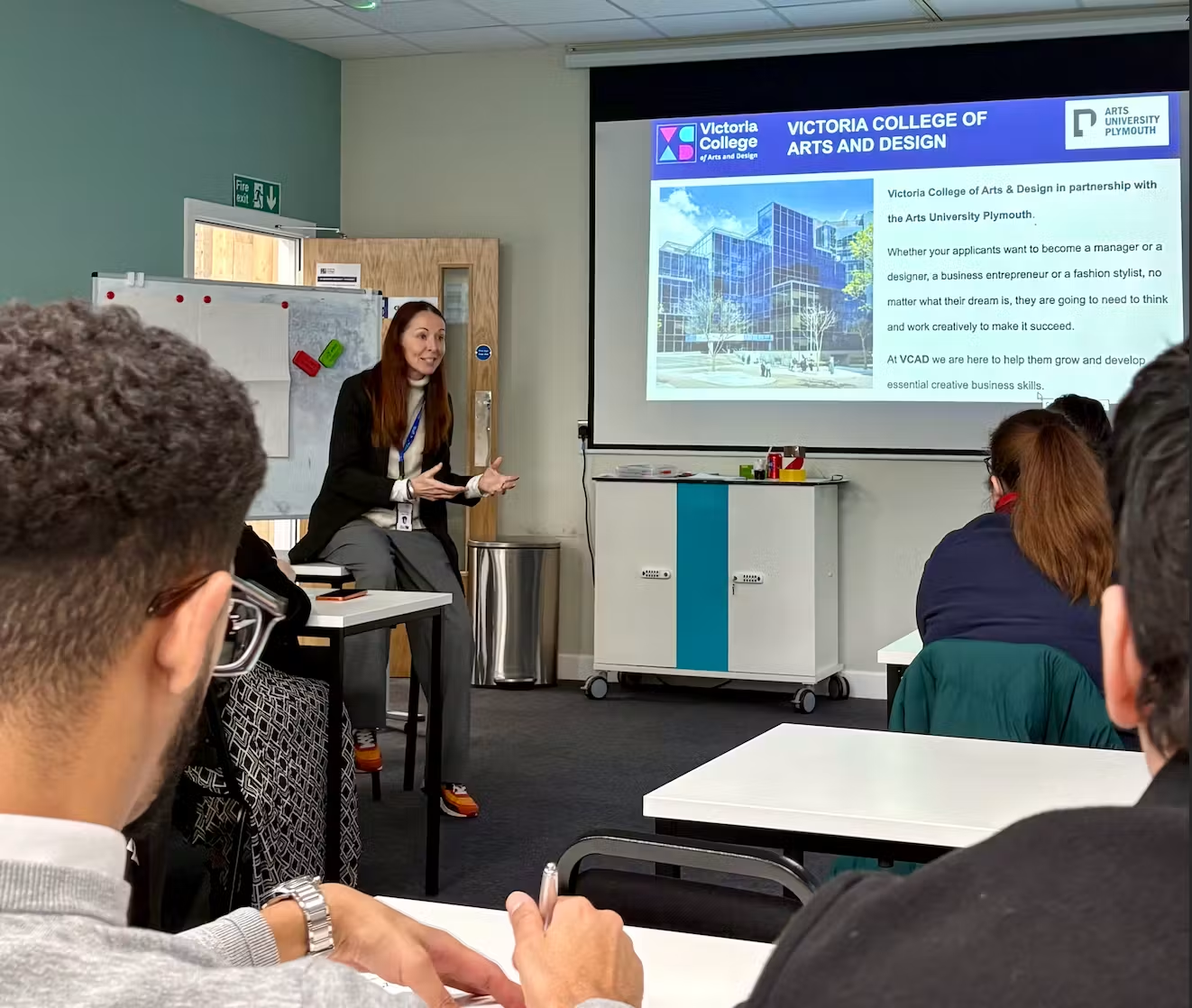
How to Build a Strong Creative Portfolio When Applying to Creative Courses at VCAD?
Yesterday, the Uni Talent Network team took part in an engaging and insightful training session led by Ann, Dean of Arts and Design at the Victoria College of Arts and Design (VCAD) . The session focused on the student portfolio , which is one of the most important parts of the admissions process for creative programmes at VCAD. Ann shared practical guidance on creating an authentic portfolio that genuinely reflects a student’s creativity, ideas and potential. This blog highlights the key principles she discussed, designed to support students preparing to apply for creative courses at VCAD. 1) Why Your Portfolio Matters For creative degrees, a portfolio is more than just a collection of work. It demonstrates your thinking, development and potential as a designer or a creative communicator. Ann explained that admissions team review portfolios to understand: How you approach ideas How you experiment and problem-solve What inspires you How you communicate visually How your creativity has progressed over time Compulsory Portfolio Courses at VCAD A portfolio is a mandatory requirement for the following programmes: BA Fashion Media and Marketing with Foundation Year BA Graphic Design with Foundation Year These courses require direct evidence of visual thinking, creativity and design capability. Ann also clarified that students are expected to submit a minimum of 6 pages in their portfolio. These pages should demonstrate both development work and final outcomes. 2) Your Portfolio Should Be Authentically Yours One of the strongest messages Ann shared was the importance of authenticity . Your portfolio must genuinely reflect your own creativity and your own voice. Avoid using AI to write portfolio content Your written reflections do not need to sound complex or overly academic. What matters is that your explanations are: Clear Honest Personal Reflective Using AI to write your artist statements, project descriptions or reflections removes your voice and will be considered as an academic misconduct violation . Avoid AI-generated artwork and designs AI-generated images do not demonstrate your skills, process or creative decision-making. Admissions teams want to see your thinking, not the output of an automated tool. Avoid Canva templates Using pre-made templates, such as Canva designs, and presenting them as original work does not reflect your creativity. This is also treated as academic misconduct because it misrepresents authorship. Ann emphasised, even imperfect work created by you is far more valuable than something produced by AI or templates. 3) Keep Your Portfolio Simple, Clear and Honest A strong portfolio does not need to be overly designed or complicated. Ann encouraged students to focus on clarity and structure rather than perfection. She also noted that while students must submit at least 6 pages , those pages should be carefully considered. More pages do not equal a better portfolio, and adding unnecessary work can weaken the overall impression. Include your creative process Show sketches, early ideas, visual experiments and development work. Curate your strongest pieces Quality is more important than quantity. Select the work that best represents your creativity and growth. Explain your thinking in your own words A few sentences describing your idea, inspiration and development process are enough. Use a clean layout Avoid cluttered pages or heavy design. A simple structure helps the viewer focus on your work. During the training session, Ann guided our team through creating a mock portfolio. This activity helped us understand what students experience during the submission process and the level of clarity and honesty that successful portfolios require. 4) What VCAD Looks For in a Portfolio Ann shared the characteristics commonly found in strong portfolios: Authenticity Evidence of personal creative growth A willingness to experiment Visual storytelling Honest self-reflection A clear sense of personal style Original work created by the student Students do not need perfectly polished work. They simply need to show who they are creatively and demonstrate the potential to grow. 5) Final Thoughts Ann’s session offered practical, clear and inspiring guidance on how students can prepare a portfolio that accurately reflects their creativity and individuality. Her message was simple: Be authentic, avoid shortcuts and present work that genuinely represents your creative journey. For students applying to creative courses at VCAD, especially Fashion Media and Marketing or Graphic Design , submitting a thoughtful and honest portfolio, with at least 6 well-structured pages , forms the strongest foundation for a successful application.
Ashis L
December 10, 2025