
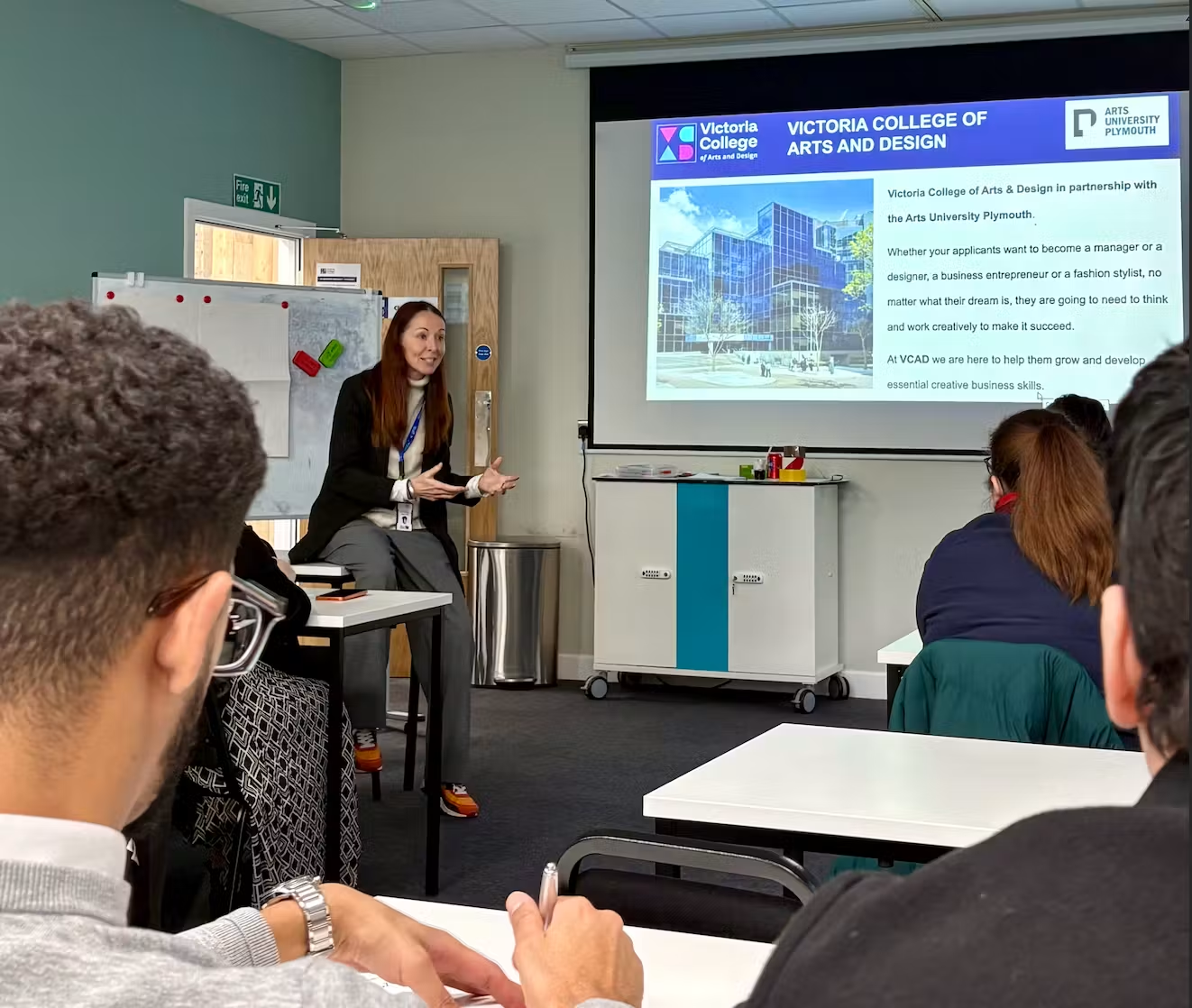
Yesterday, the Uni Talent Network team took part in an engaging and insightful training session led by Ann, Dean of Arts and Design at the Victoria College of Arts and Design (VCAD). The session focused on the student portfolio, which is one of the most important parts of the admissions process for creative programmes at VCAD.
Ann shared practical guidance on creating an authentic portfolio that genuinely reflects a student’s creativity, ideas and potential. This blog highlights the key principles she discussed, designed to support students preparing to apply for creative courses at VCAD.
1) Why Your Portfolio Matters
For creative degrees, a portfolio is more than just a collection of work. It demonstrates your thinking, development and potential as a designer or a creative communicator. Ann explained that admissions team review portfolios to understand:
How you approach ideas
How you experiment and problem-solve
What inspires you
How you communicate visually
How your creativity has progressed over time
Compulsory Portfolio Courses at VCAD
A portfolio is a mandatory requirement for the following programmes:
BA Fashion Media and Marketing with Foundation Year
BA Graphic Design with Foundation Year
These courses require direct evidence of visual thinking, creativity and design capability. Ann also clarified that students are expected to submit a minimum of 6 pages in their portfolio. These pages should demonstrate both development work and final outcomes.
2) Your Portfolio Should Be Authentically Yours
One of the strongest messages Ann shared was the importance of authenticity. Your portfolio must genuinely reflect your own creativity and your own voice.
Avoid using AI to write portfolio content
Your written reflections do not need to sound complex or overly academic. What matters is that your explanations are:
Clear
Honest
Personal
Reflective
Using AI to write your artist statements, project descriptions or reflections removes your voice and will be considered as an academic misconduct violation.
Avoid AI-generated artwork and designs
AI-generated images do not demonstrate your skills, process or creative decision-making. Admissions teams want to see your thinking, not the output of an automated tool.
Avoid Canva templates
Using pre-made templates, such as Canva designs, and presenting them as original work does not reflect your creativity. This is also treated as academic misconduct because it misrepresents authorship.
Ann emphasised, even imperfect work created by you is far more valuable than something produced by AI or templates.
3) Keep Your Portfolio Simple, Clear and Honest
A strong portfolio does not need to be overly designed or complicated. Ann encouraged students to focus on clarity and structure rather than perfection.
She also noted that while students must submit at least 6 pages, those pages should be carefully considered. More pages do not equal a better portfolio, and adding unnecessary work can weaken the overall impression.
Include your creative process
Show sketches, early ideas, visual experiments and development work.
Curate your strongest pieces
Quality is more important than quantity. Select the work that best represents your creativity and growth.
Explain your thinking in your own words
A few sentences describing your idea, inspiration and development process are enough.
Use a clean layout
Avoid cluttered pages or heavy design. A simple structure helps the viewer focus on your work.
During the training session, Ann guided our team through creating a mock portfolio. This activity helped us understand what students experience during the submission process and the level of clarity and honesty that successful portfolios require.
4) What VCAD Looks For in a Portfolio
Ann shared the characteristics commonly found in strong portfolios:
Authenticity
Evidence of personal creative growth
A willingness to experiment
Visual storytelling
Honest self-reflection
A clear sense of personal style
Original work created by the student
Students do not need perfectly polished work. They simply need to show who they are creatively and demonstrate the potential to grow.
5) Final Thoughts
Ann’s session offered practical, clear and inspiring guidance on how students can prepare a portfolio that accurately reflects their creativity and individuality. Her message was simple:
Be authentic, avoid shortcuts and present work that genuinely represents your creative journey.
For students applying to creative courses at VCAD, especially Fashion Media and Marketing or Graphic Design, submitting a thoughtful and honest portfolio, with at least 6 well-structured pages, forms the strongest foundation for a successful application.